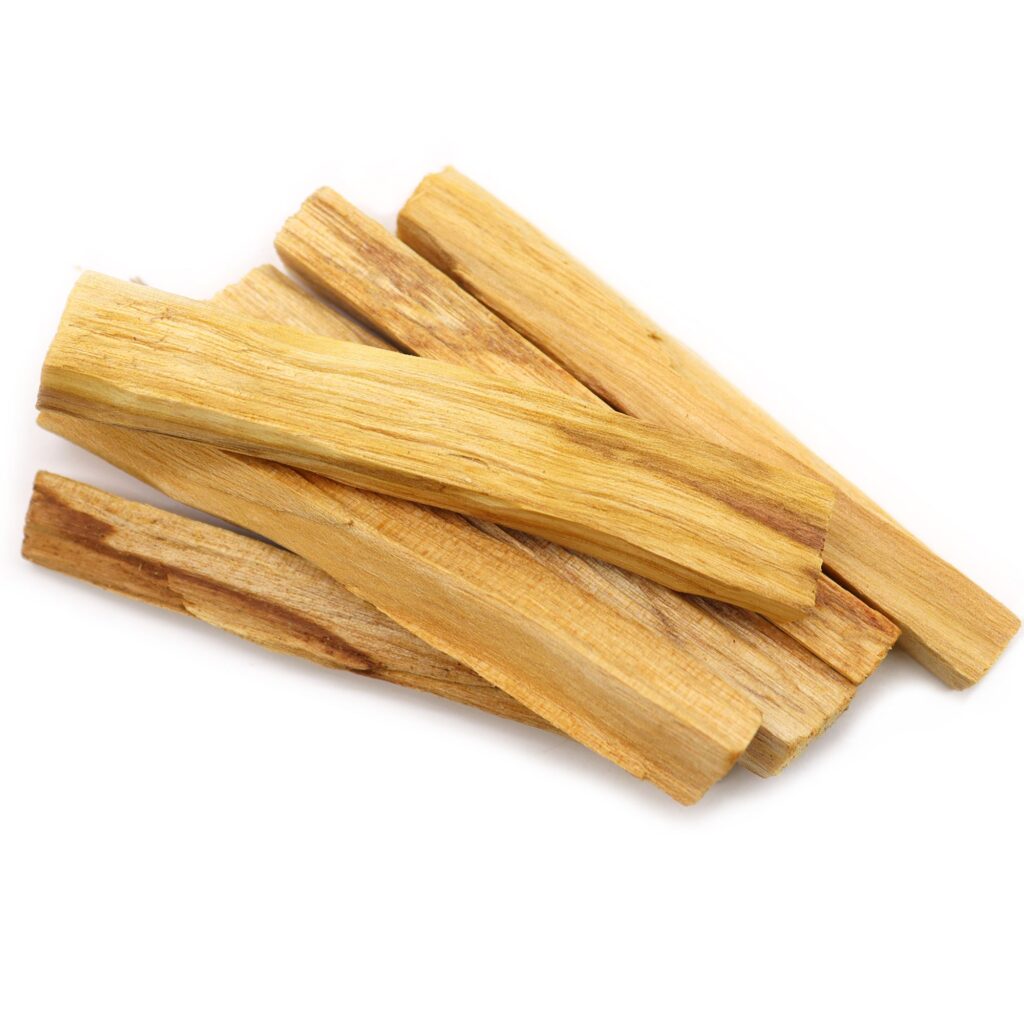
An incense holder may be a small accessory, but it has an important job: keeping incense steady, catching ash and making a quiet moment at home more practical. The best holder depends on what you burn. A slim incense stick, a thick handmade stick, an incense cone and a piece of Palo Santo wood do not all need the same support.
In this guide, we compare holder types and materials, explain how to use and clean them, and explore the history of incense burners. The product examples come from Kuutaro’s actual online catalogue; always check the individual product page for suitability and current availability.
Which incense holder is right for your incense?
Stick incense holders: stability and ash collection
For a thin, bamboo-cored incense stick, look for a secure hole and a base wide enough to catch falling ash. If the holder is very small or the stick leans far outwards, ash may land on your furniture. Kuutaro’s aluminium lotus incense holder is a decorative option for incense sticks. Its layered lotus design reflects a flower often associated with purity and personal growth in Asian spiritual traditions.
Before lighting the stick, check that it stands securely and does not wobble. Long sticks may require a wider ash-catching surface. Never force a thick incense stick into an opening that is too narrow.
Palo Santo and sage holders: space and heat resistance
A piece of Palo Santo wood or a bundle of sage differs from a slim incense stick. The glowing end is larger and hot ash may fall in different directions. Choose a stable, roomy container that the manufacturer specifically identifies as suitable for the intended use. Kuutaro lists a red Palo Santo, incense and sage holder and a blue lotus ritual holder among its ritual accessories.
Keep in mind that a decorative holder is not automatically designed to contain a burning piece of wood or charcoal for a long time. Follow the manufacturer’s instructions, use a separate fire-safe vessel if required, and make sure all glowing material is fully extinguished.
Incense cones and loose incense
A holder designed for sticks is not necessarily suitable for incense cones or loose resins burned over charcoal. Those materials may require a purpose-built heat-resistant burner and, in some cases, a layer of suitable sand. Never assume compatibility merely because a holder is made of metal, stone or ceramic.
Materials compared: metal, ceramic and stone
Metal incense holders
Metal can be durable and easy to wipe clean, but it also conducts heat. Always place a metal holder on a suitable heat-resistant surface and avoid touching it immediately after use. The aluminium lotus holder is an option for someone who wants a lightweight, visually distinctive accessory.
Ceramic incense holders
Ceramic holders range from small stick supports to larger bowls. A glazed surface is often straightforward to clean, although impacts and sudden temperature changes can damage ceramic. Kuutaro also offers Tribal Soul incense with a ceramic holder for those who prefer a ready-made incense-and-holder set.
Stone and other materials
Natural stone can look calm and earthy, but different stones react differently to heat. Wooden, resin and painted decorative holders may have additional limitations. Use the product’s actual instructions rather than assuming that the labels “natural” or “ritual” guarantee fire resistance.
A short history of incense holders and their symbolism
Burning fragrant materials has been part of religious, domestic and ceremonial life in many cultures for centuries. The vessels used for incense range from simple bowls to elaborately decorated metal and ceramic burners. A 16th–17th-century Chinese incense burner at the Metropolitan Museum of Art demonstrates the artistic importance of these objects as well as their practical purpose.
An Edo-period Japanese lacquer incense burner documents the use of incense to scent rooms, clothing and hair. A 13th-century metal incense burner from Mosul in the British Museum shows that sophisticated incense-vessel craftsmanship also flourished far beyond East Asia. These museum objects provide historical context, not modern instructions for burning incense at home.
The lotus motif is associated with renewal, clarity and growth in several spiritual traditions. Today, an incense holder can be both a practical accessory and a personal decorative object; the meaning of a ritual is ultimately shaped by the person practising it.
How to use an incense holder safely
- Choose a secure location. Place the holder on a flat, non-combustible surface, away from curtains, paper and other flammable materials.
- Check the fit. Make sure the stick, cone or piece of wood is stable and that hot ash cannot fall outside the intended collection area.
- Ventilate the room. Smoke can irritate the airways. Avoid burning incense around people or pets that are sensitive to smoke.
- Never leave burning incense unattended. Keep children and animals away from the holder.
- Let everything cool. Before cleaning, check that the ash, charcoal and holder are completely cold.
Burning incense is not essential to enjoying a mindful pause. If smoke is unsuitable for your household, a quiet moment, gentle music or an unlit decorative ritual space can serve the same personal purpose.
How to clean and care for an incense holder
Remove fully cooled ash with a soft brush or dry cloth. Glazed ceramic can often be wiped gently with a damp cloth, subject to the product’s care instructions. For metal, avoid abrasive pads and dry the surface thoroughly. Do not soak holders that contain paint, lacquer, glue or other delicate finishes.
Inspect your holder from time to time for cracks, warping or instability. Do not use a damaged holder with burning incense.
Choosing an incense holder as a gift or for a ritual corner
For someone who mainly burns incense sticks, choose a simple design with a sufficiently large ash-catching surface. If they prefer Palo Santo or sage, look for a more spacious holder intended for that use. A set combining incense and a ceramic holder may be a convenient gift for beginners. The most useful gift suits the recipient’s real habits, not just its symbolism.
For related reading, explore Kuutaro’s guides to incense and sacred plants, Palo Santo and white sage.
Frequently asked questions
Can one incense holder be used for sticks, cones and Palo Santo?
Not necessarily. The opening, size and heat resistance must suit the specific material. Check the product description before use.
Does an incense holder have to be ceramic?
No. Metal and other materials may also be suitable when the manufacturer confirms the intended use.
Can I clean an incense holder immediately after burning?
No. Wait until the ash, residue and holder have cooled completely.
Can I use an incense holder in a small apartment?
Yes, if there is a stable, safe place for it, but ventilation and the needs of others in the room are important. You can also enjoy the holder simply as a decorative item without lighting incense.
Find an incense holder at Kuutaro
Compare the aluminium lotus incense holder, the blue lotus Palo Santo holder and the red ritual holder. You can explore more in Kuutaro’s Ritual Tools category. Choose according to the incense you actually use, the holder’s stability and its care requirements, and confirm availability on each product page.